

Wolfe’s Neck Farm
Category
Institutional, Master PlanningAbout This Project
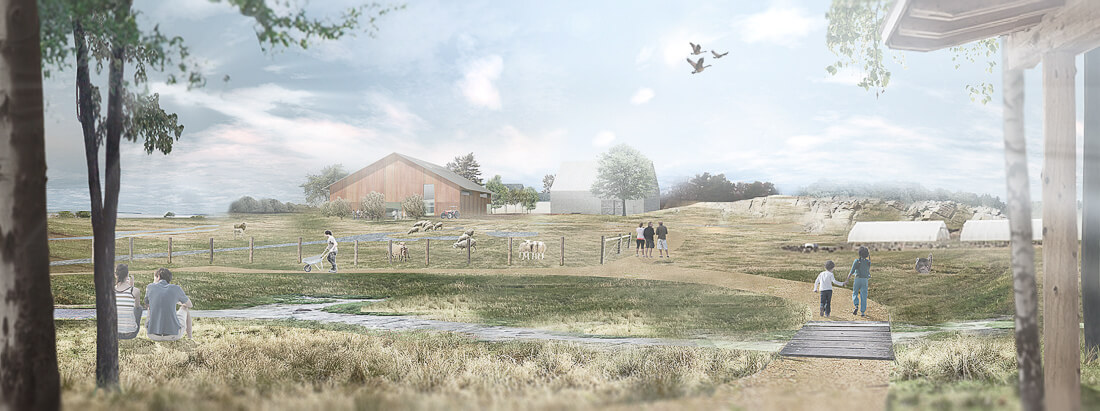
The Wolfe’s Neck Farm Master Plan, developed in collaboration with Ann Kearsley Design, is an agriculture-based educational and recreational campus, located on a 626-acre saltwater farm on the shores of Casco Bay in Freeport, Maine.
The Wolfe’s Neck peninsula has been farmed since the 17th century and Wolfe’s Neck Farm is the aggregation of several small farm holdings assembled over time in the mid-20th century by the Smith Family. The Smiths, pioneers of the sustainable agricultural movement, operated an organic beef farm using innovative and experimental techniques and sharing their knowledge with other Maine farmers.
Wolfe’s Neck Farm, a non-profit organization, has been a working farm and a demonstration and educational facility for sustainable agriculture since the early 1950’s. A recent grant from Stonyfield Farm to develop an Organic Pasture Dairy Farmer Training Program brings new focus to WNF’s efforts to help shape the future of agriculture in Maine and New England. Through the integration of organic farming, sustainable agricultural research, training and education, and sustainable business practices, WNF is committed to using its diverse programming and beautiful landscape to provide educational and recreational resources for its local and regional communities.
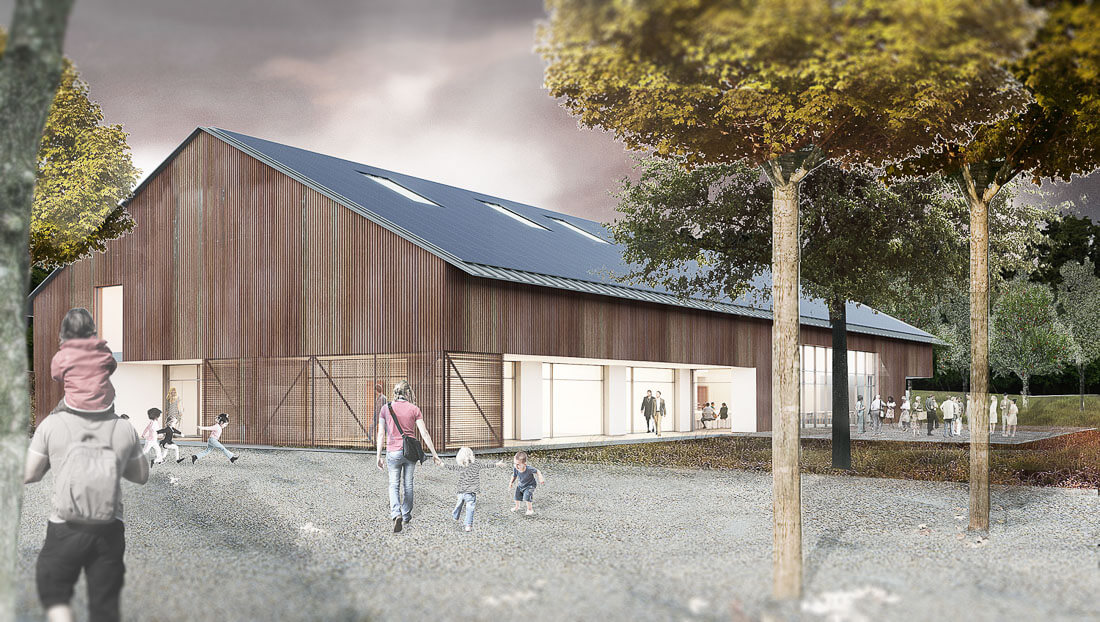
The master plan, developed by GO Logic in collaboration with Ann Kearsley, involves the creation of a campus at Wolfe’s Neck Farm, to serve as a central destination for visitors. Construction and renovations will occur in phases, and the Little River Campus will be the locus of programming activity at Wolfe’s Neck Farm, providing expanded facilities and support infrastructure for the Summer Camp, the Teen Ag/CSA program, the Small Animal/Diversified Livestock operation and Recompence Shore Campground. In addition, the campus will house a new Education and Conference Center with classrooms, a commercial kitchen and dining facility, and the Farm’s administrative offices. The new Organic Pasture Dairy Training Program will have offices in the Little River Campus, but the main dairy facility will be located at the Banter Farmstead.
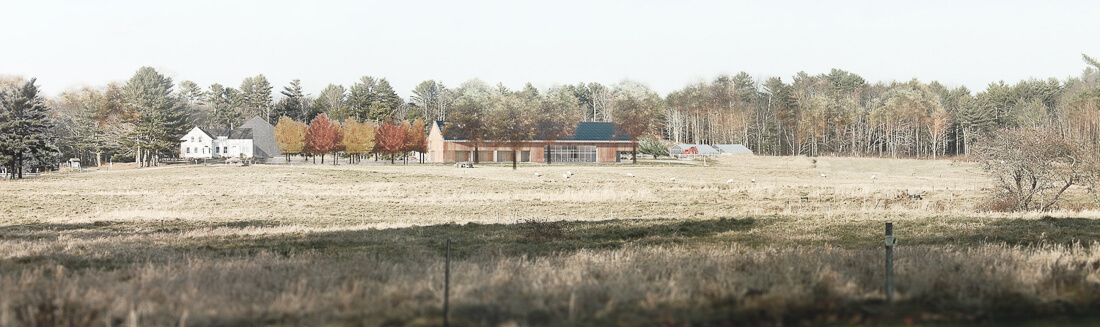
The new Education and Conference Center building will be centrally located on the farm, and will reference its existing agrarian predecessor in size and appearance, rebuilt as a highly energy-efficient and flexible use building. The prime location on the site is maximized by creating strong relationships with its surroundings; the main interior gathering spaces opens to the South with views, the main entry faces the flexible curb-less street shared by cyclists, pedestrians and cars to the West, and the kitchen faces the gardens and vegetable processing area to the East. The new education building will house a large dining facility, commercial kitchen, and three large conference rooms on the first floor, a series of office spaces and a conference room on the second floor, and ample storage and support spaces throughout. Many different user groups will be able to occupy the building simultaneously, which improves the utilization of the structure while resulting in a unique, dynamic atmosphere that encourages coincidental meetings and spontaneous interactions.